
Leverage & Margin
How Leverage and Margin Apply to Your Account
LEVERAGE & MARGIN
Leverage and margin are key features of trading Contracts for Difference (CFDs). They allow clients to gain exposure to financial markets by depositing only a portion of the total value of a position.
While leverage can increase market exposure, it also increases the level of risk, as both profits and losses are magnified.

What is Leverage?
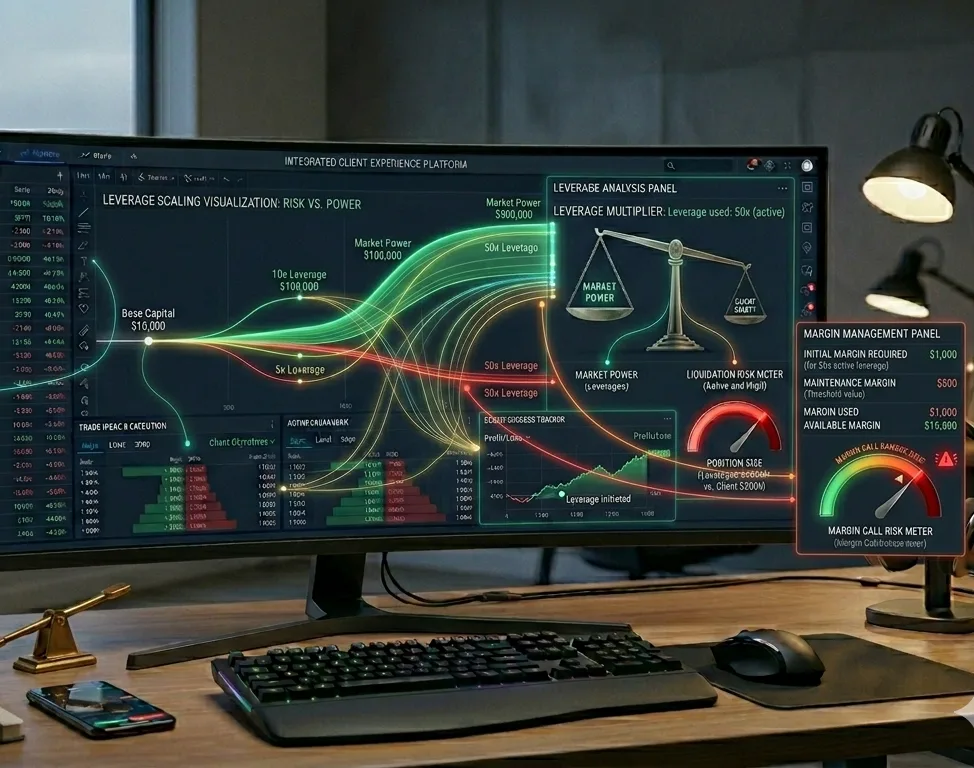
Leverage refers to the use of a smaller amount of capital to control a larger trading position.
For example, with leverage of 1:10, a position of €10,000 can be opened with €1,000 of own funds. The remaining exposure is effectively provided by the Company.
Leverage enables greater market exposure; however, it is important to understand that it is a double-edged mechanism, as it can amplify both gains and losses.
What is Margin?
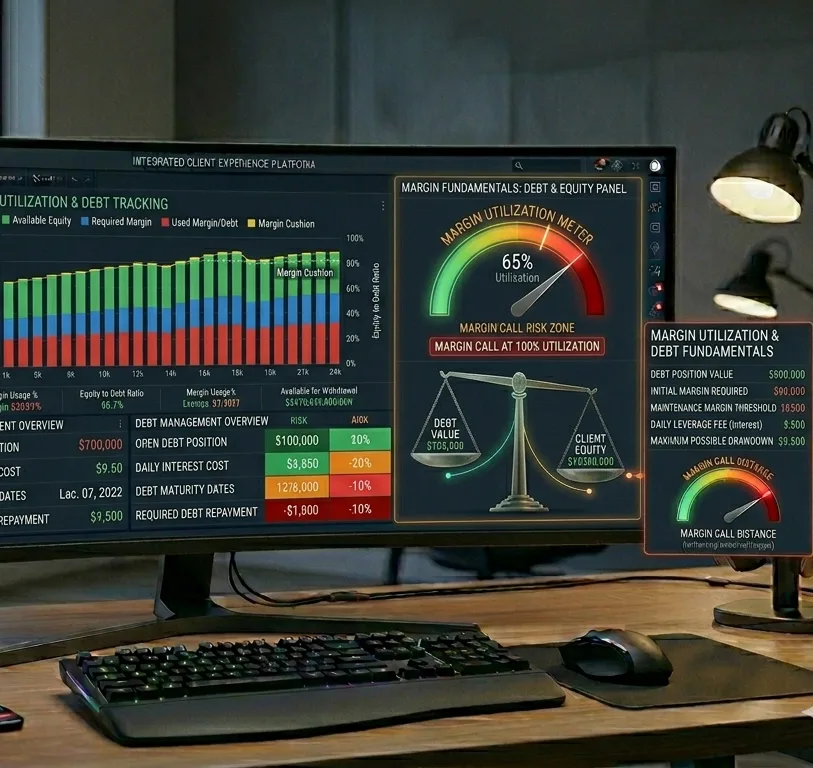
Margin is the amount of funds required to open and maintain a leveraged position.
When a position is opened, a portion of the client’s funds is reserved as initial margin. This amount acts as collateral for the position and remains allocated for as long as the position is open. Once the position is closed, the margin is released back to the account, subject to any realised profit or loss.
The margin requirement is typically expressed as a percentage of the total position size and varies depending on the financial instrument traded.
Margin Requirement Calculation
The required margin is calculated as a percentage of the total position size:
For example, if a client opens a position of €10,000 with a margin requirement of 5%, the required margin would be €500.
Leverage Limits
| Asset Class | Maximum Leverage | Minimum Margin Requirement |
| Major Currency Pairs (e.g. EUR/USD) | 30:1 | 3.33% |
| Non-Major Currency Pairs, Gold | 20:1 | 5% |
| Major Indices (e.g. S&P 500, FTSE 100) | 20:1 | 5% |
| Other Commodities & Non-Major Indices | 10:1 | 10% |
| Individual Shares (Equities) | 5:1 | 20% |
| Cryptocurrencies | 2:1 | 50% |
How Leverage Works in Practice
When trading CFDs, clients are not required to deposit the full
value of a position. Instead, only the required margin must be available in the trading account.
This means you can open larger positions with a smaller
initial amount, while your profits and losses are still based on the full position size.
As the market moves, your account balance updates in real
time. It’s important to maintain enough funds in your account to keep your positions open.
All positions, margin requirements, and account equity can be monitored in real time through the Company’s trading platform.
Understanding the Risks
Leverage can increase your market exposure, but it also increases risk. Even small price movements can have a larger impact on your account when trading with leverage.
It’s important to monitor your positions and maintain sufficient margin at all times, as positions may be closed automatically if account equity falls below required levels.
Retail clients benefit from negative balance protection, meaning losses cannot exceed the funds available in their account.
You should ensure that you fully understand how leverage and margin work before trading.